The Chromobase is the open access database of the ERC project Chromotope. This EU-funded project (2019-2025) explores what happened to colour across industrial Europe (France, Britain and Germany) in the second half of the 19th century.
It is a hybrid digital object, both a collection of scholarly articles and a database. The project is based on a narrative approach to data, with a series of articles enhanced by hypertextual materials (people, organizations, objects, techniques, colour names, events).
We opted for a homepage that immediately showcases the different facets of exploration within the publication: hypertextual articles, a timeline of these articles, various groups of notices available (people, organizations, objects, techniques, colour names, events), and a colour wheel.
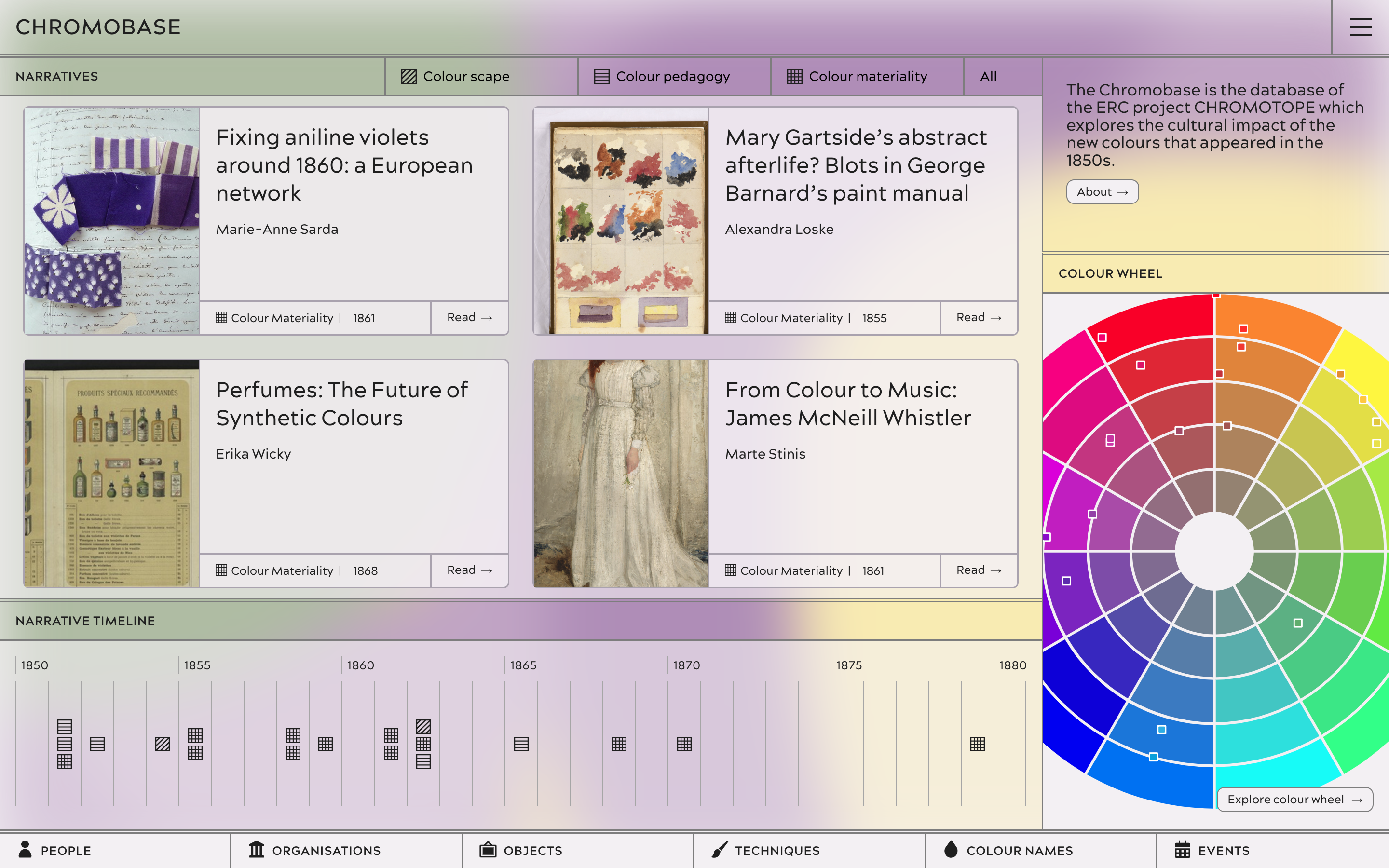
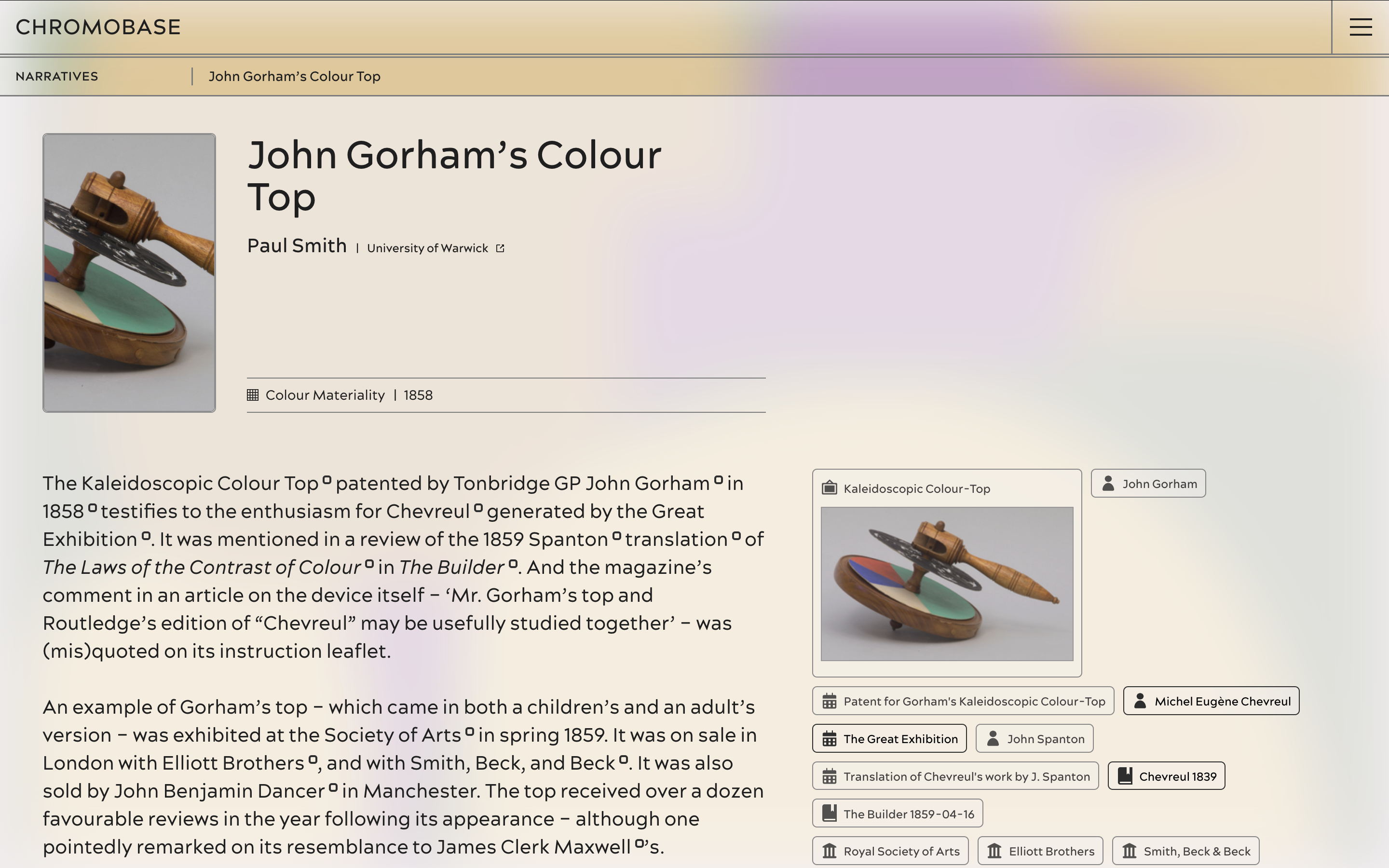
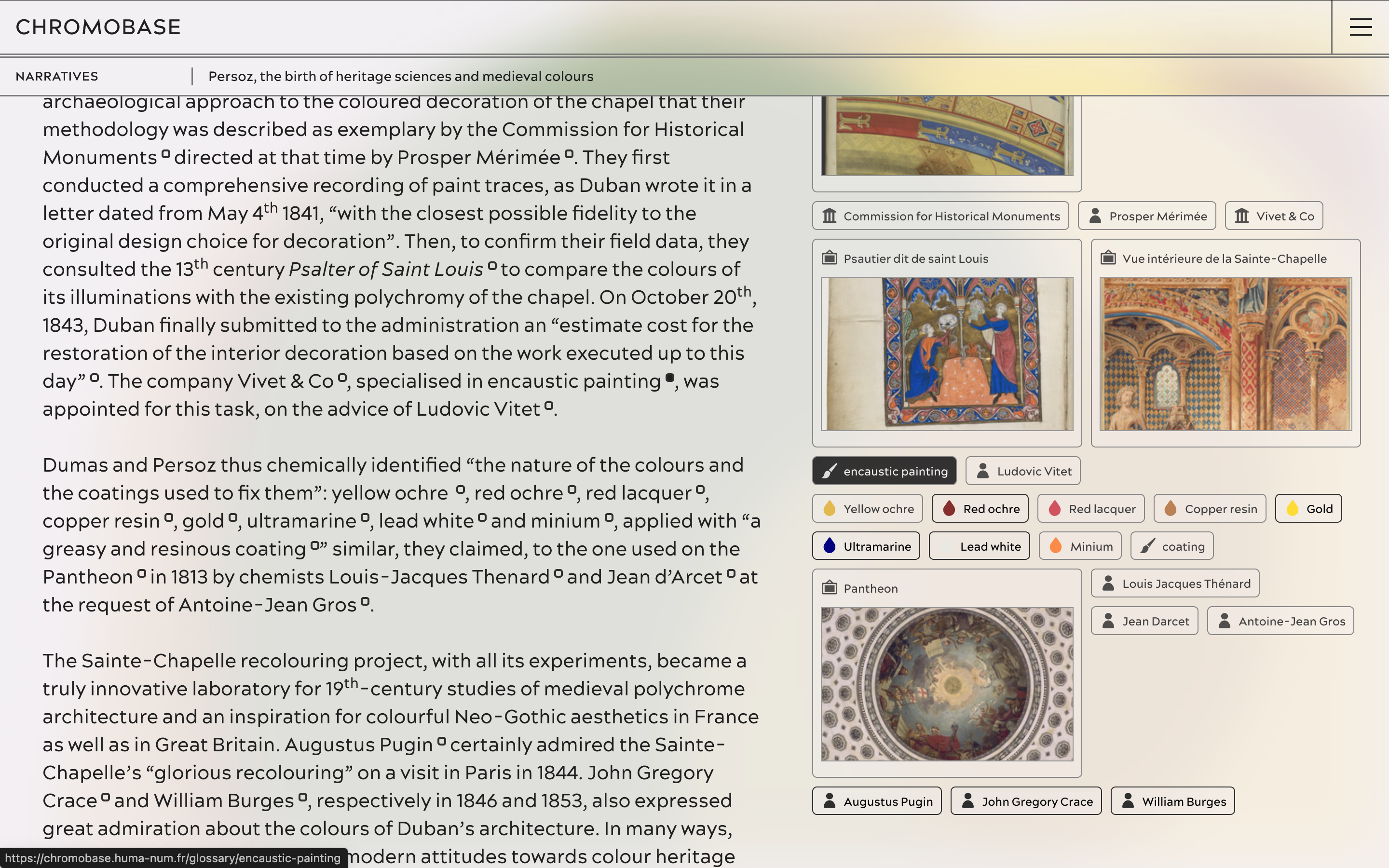
Narrative pages are short scholarly articles, each presenting a specific case or aspect of the project. Hyperlinks reference the various notices in the publication (people, organizations, objects, techniques, colour names, events) as well as bibliographical references. These narratives help contextualize the project’s data and highlight their interactions.
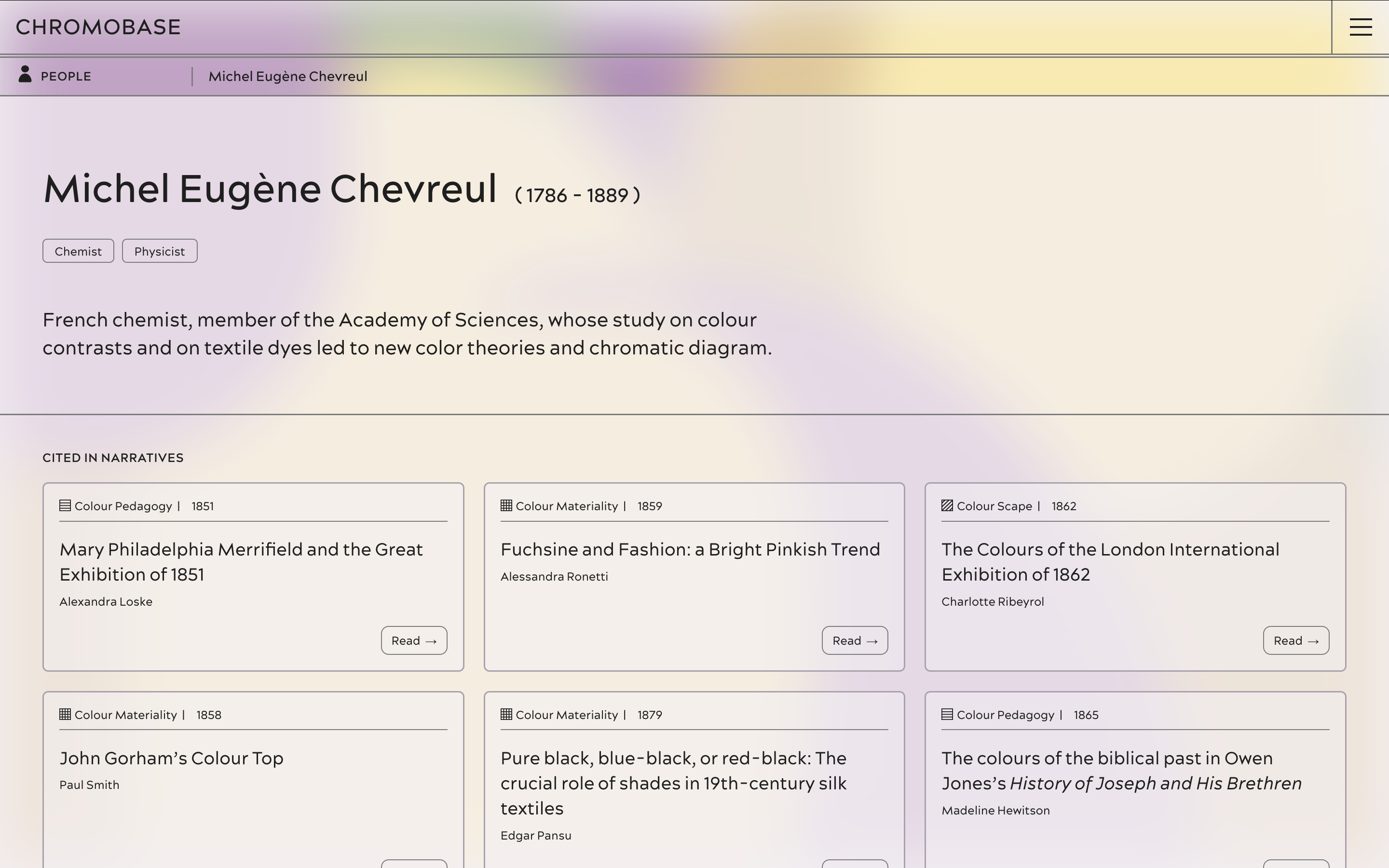
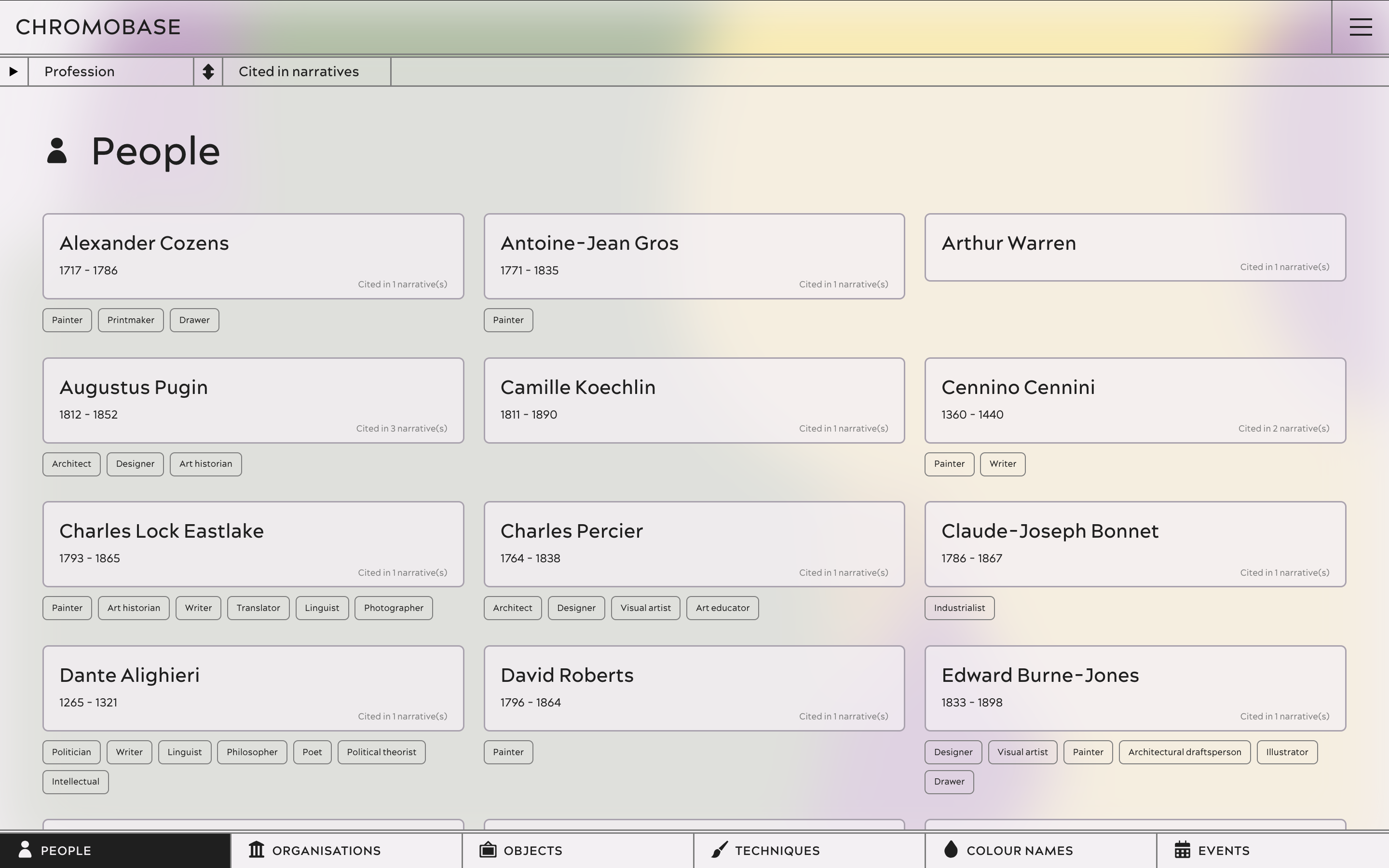
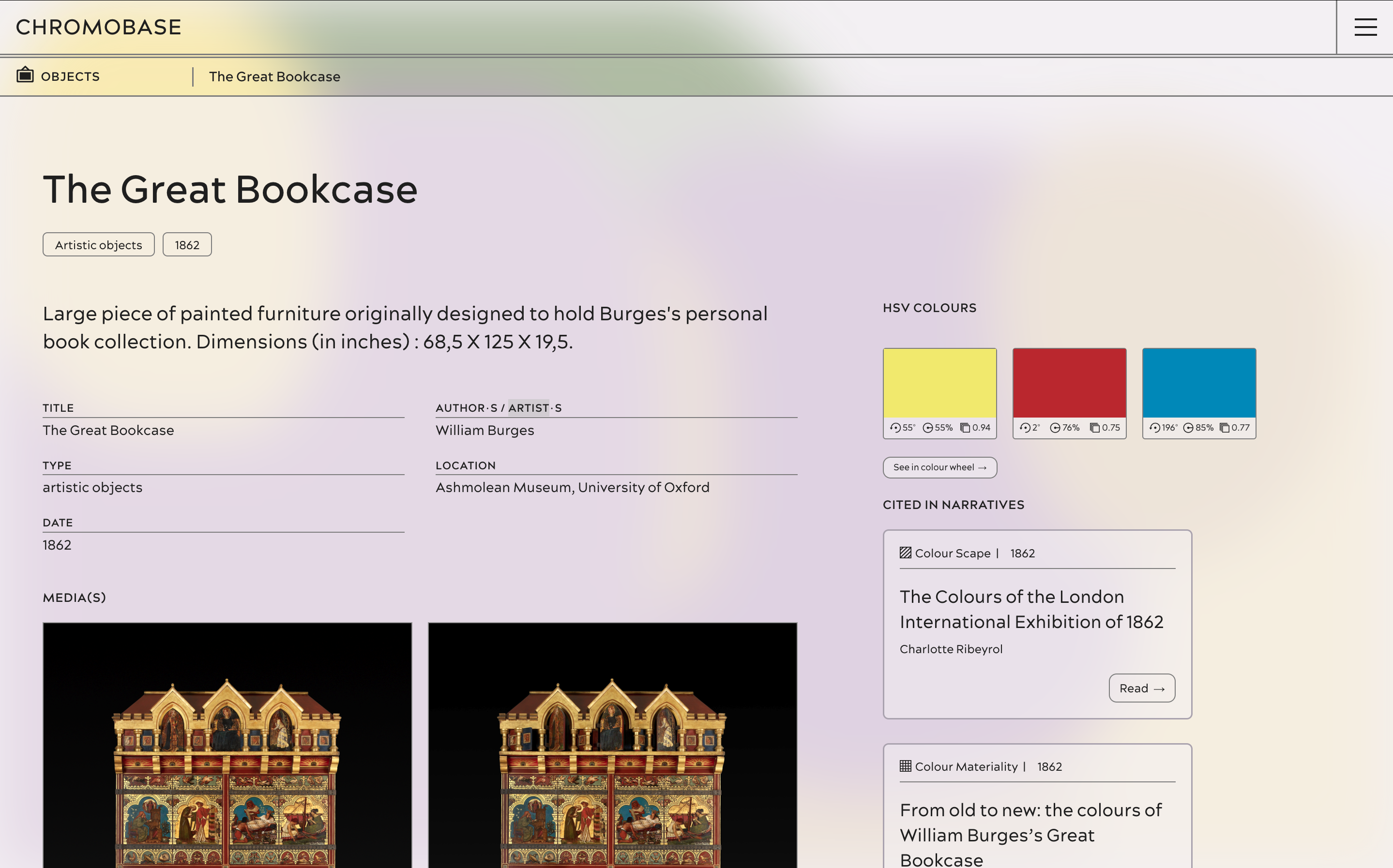
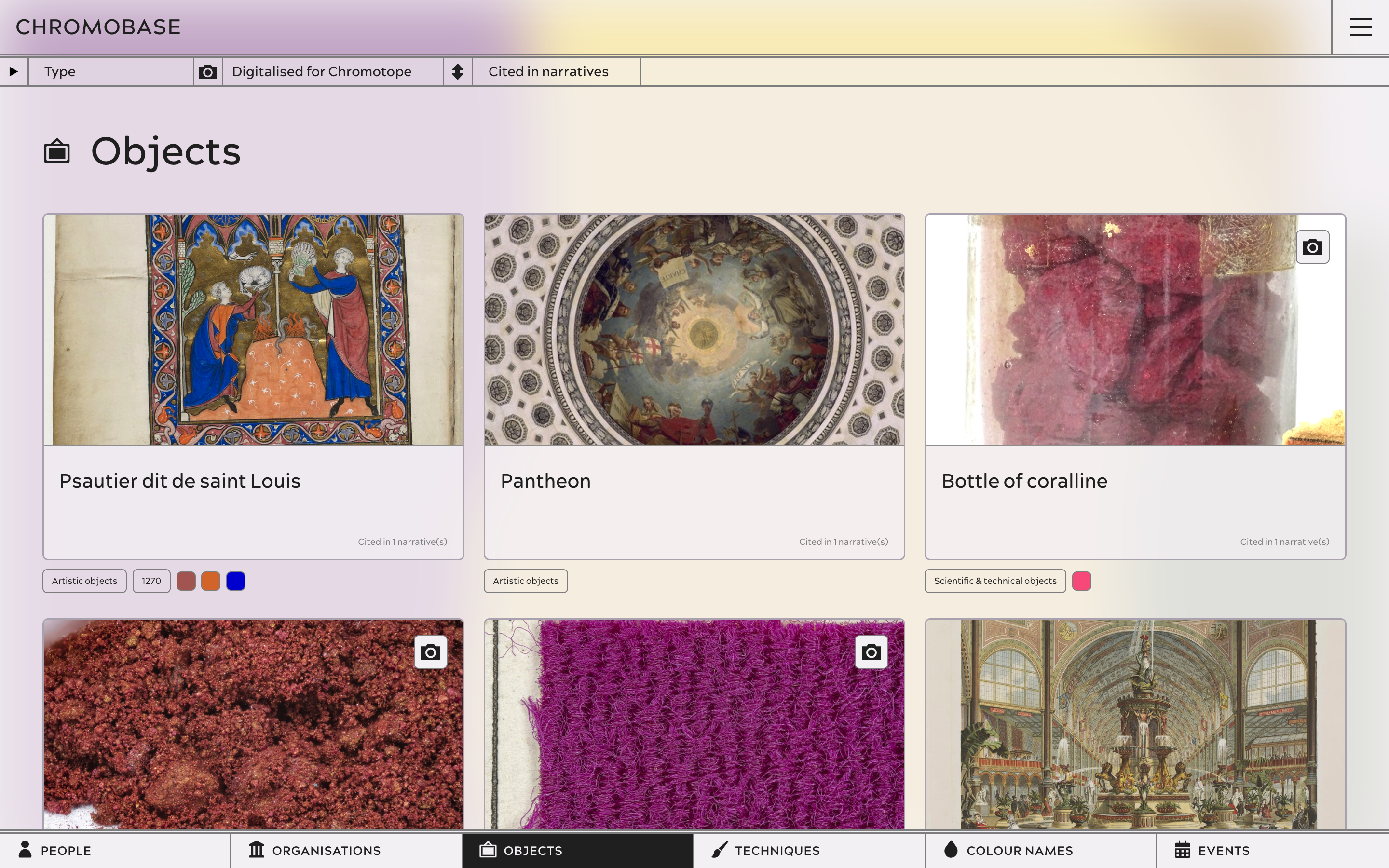
Notices pages (person, event, object, technique, colour, or reference) are both informative, providing additional details, and exploratory, as they always refer back to the narratives that cite them, much like a glossary. Users can also browse these notices through list pages featuring filterable and sortable lists of items by type.
Numerous metadata attributes have been associated with “Objects” notices, some of which have been digitized in high definition specifically for this project.
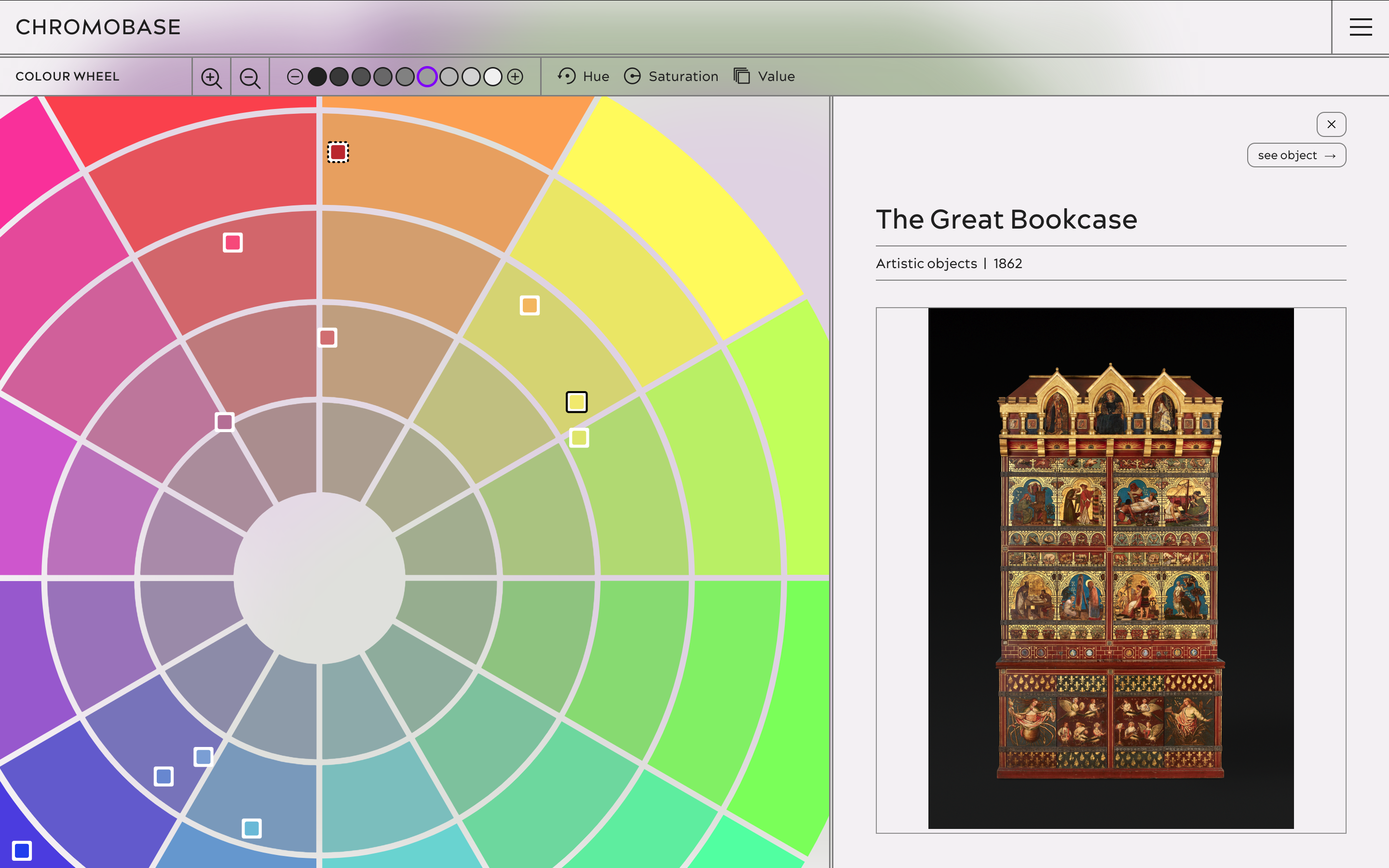
The colour wheel is based on the first colour systems including brightness and chroma published by the chemist Michel-Eugène Chevreul (1786-1889) in Colours and Their Application to Industrial Arts Using Chromatic Circles (1864). We used the HSV space as it is the contemporary colour space closest to his “chromatic circles.” Users can explore publication objects arranged in different layers according to their dominant colours.
This project has been fueled by an interdisciplinary dynamic combining humanities, graphic design, web development and structured publishing. The close collaboration between the research team, OuestWare, and me aimed to bring together epistemology and materiality, where technical and visual devices are developed in resonance with research issues.
The technical part was carried out by OuestWare, which developed a custom text/database editor built using the headless Content Management System (Keystone.js) and designed to consume as few resources as possible.
My role was to design the site’s ergonomics and interface to facilitate navigation through these datasets. I also provided the HTML templates and CSS stylesheets.